
Saluting Women Warriors of Operation Sindoor; Decision to Send Bangles to PM Modi
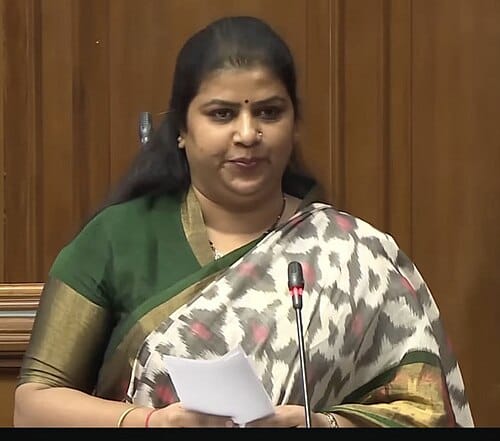
The Aam Aadmi Party (AAP) has honored the brave daughters who played a key role in Operation Sindoor. At an event held at the AAP headquarters, the party paid tribute to the valor of these women soldiers and announced its plan to send bangles to Prime Minister Narendra Modi. Senior leader and former Deputy Speaker of the Delhi Assembly, Rakhi Bidlan, condemned the Modi government for abruptly calling a ceasefire under American pressure while the Indian Army was making significant gains. Allegations of Ceasefire Under U.S. PressureRakhi Bidlan stated that during Operation Sindoor, the Indian Army inflicted heavy damage on Pakistani terror camps and the hope of reclaiming PoK (Pakistan-occupied Kashmir) was alive. However, when the forces were advancing steadily, the government suddenly announced a ceasefire without informing the nation or consulting all parties. She questioned whether Modi, despite his strong image, succumbed to external pressure, and whether the ceasefire was influenced by the United States. Strong Response to BJP’s Criticism of Women SoldiersBidlan strongly criticized BJP leaders who used abusive language against Colonel Sophia Qureshi and the daughter of the Foreign Secretary, who fought bravely during the operation. She called this attitude “anti-women” and demanded that BJP show respect for women’s empowerment and the valor of the country’s daughters. Women’s Empowerment and the Role of Women in DefenseDr. Shaili Oberoi, former Mayor of Delhi, emphasized the contribution of women in all fields. She recalled the terror attack in Pahalgam and highlighted how women in the Indian Army displayed unmatched courage in retaliation through Operation Sindoor. Officers like Wing Commander Vyomika Singh and Colonel Sophia Qureshi proved that women are no less than men in any battlefield. Dr. Oberoi urged the government to take concrete steps toward women’s empowerment so that women can continue to rise in every sector. Message from AAP Women’s WingSarika Chaudhary, President of the AAP Delhi Women’s Wing, praised the bravery of the army’s women warriors. She said that Vyomika Singh and Sophia Qureshi’s courage has inspired all women across the country, proving that women are equally strong and capable as men.
Rahul Gandhi Addresses ‘Shiksha Nyay Samvad’, Voices Concerns of Marginalized Communities
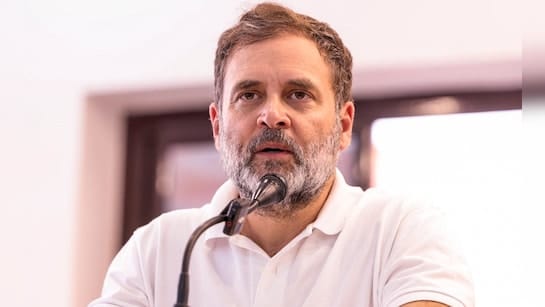
Rahul Gandhi, addressing the ‘Shiksha Nyay Samvad’ program, began by greeting the audience warmly and expressing his intent to have an open dialogue. He explained how despite administrative attempts to block his entry, including barricades, he managed to reach the venue through alternative routes to directly connect with the people. Highlighting Injustices Faced by Marginalized CommunitiesGandhi emphasized the continuous oppression faced by Dalits, backward classes, extremely backward classes, and tribal communities in India. He highlighted how these groups are systematically suppressed, denied equal access to education, and subjected to unfair practices like exam paper leaks aimed at stalling their careers. He outlined three core demands his party stands forProper caste-based census similar to the one conducted in Telangana.Implementation of reservation policies in private colleges and universities as mandated by Indian law, which he claims neither the central government led by Narendra Modi nor the Bihar government has enforced. Effective utilization of funds allocated under the SC-ST Sub-Plan for the benefit of these communities. Rahul Gandhi stressed the importance of unity among these 90% marginalized populations, warning that they are being misled and distracted to keep them away from their rightful opportunities. Addressing Systemic ExclusionHe pointed out the stark absence of representation of these communities in senior bureaucracy, corporate India, judiciary, education, and medical systems. According to him, while these marginalized groups constitute the majority of manual laborers and beneficiaries of welfare schemes like MNREGA, the economic benefits and power remain concentrated in the hands of only 5-10% of the population. Rahul Gandhi reiterated his commitment to continue fighting for these demands until reservation in private institutions is realized and funds meant for marginalized communities are properly disbursed.Challenge to the GovernmentThe Congress leader accused the current government of serving the interests of big industrialists like Adani and Ambani rather than the marginalized majority. He applauded the people for their support, saying the government tried but failed to stop him from reaching them, symbolizing the strength behind his movement. He recalled how pressure from people forced the government to announce a caste census, though he described their actions as reluctant and contradictory to democratic principles.Promise of Change Rahul Gandhi assured that once his party comes to power at the central or Bihar state level, they will overhaul the existing system and work to uplift the marginalized sections with meaningful reforms. He ended his speech by thanking the audience and expressing hope for a better future.Interaction with Students: Voices from HostelsDuring the event, Rahul Gandhi invited students to speak. A student named Pradeep shared the harsh conditions in their hostels, describing mental harassment by administration and poor living facilities. He expressed hope from Rahul Gandhi as a leader and potential future Prime Minister to bring positive changes. Pradeep highlighted issues such as decreasing educational budgets, lack of effective implementation of Dalit welfare schemes, and the challenges posed by the new education policy which he described as discriminatory against marginalized groups, especially given the digital divide. He criticized privatization trends in education and healthcare, which he believes exclude SC, ST, and OBC communities from opportunities. He also mentioned the underrepresentation of these groups in media and called for more accessible journalism education.Rahul Gandhi’s Empathy and EncouragementRahul Gandhi inquired about Pradeep’s family and studies, showing empathy towards his struggles. Pradeep revealed his modest family background and how the hostel is crucial for continuing his education. He also requested the establishment of postgraduate hostels specifically for Dalit students to enable higher studies and better participation in nation-building. Rahul Gandhi acknowledged Pradeep’s concerns and asked him to convey his regards to his family, signaling personal connection and support.
Tell Modi….I Told Modi.
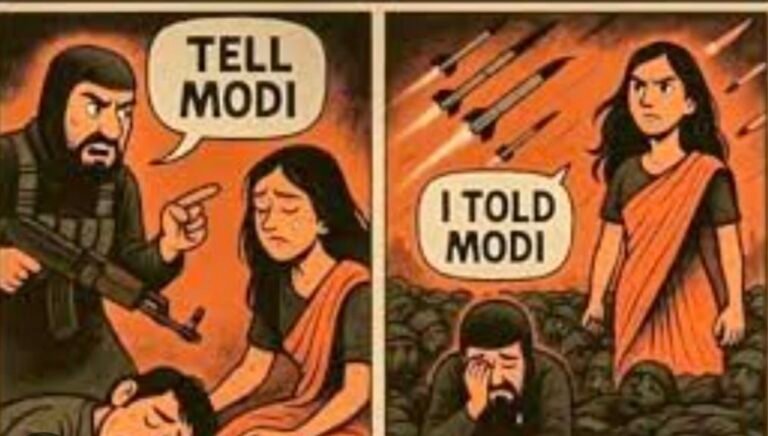
India has once again proven that it neither fears nor submits to any form of terrorism. The brutal terrorist attack in Pahalgam, Jammu & Kashmir on April 22, 2025, shook the entire nation, claiming the lives of 26 innocent civilians and leaving 17 seriously injured. The attack occurred while Prime Minister Narendra Modi was on a visit to the Saudi Arebia and U.S. Vice President JD Vance was visiting India. India’s response to this attack was recorded in history as “Operation Sindoor.” The Terrorist Attack: A Cowardly Act The primary targets of this attack were tourists vacationing in the picturesque valleys of Baisaran, often referred to as the “Mini Switzerland.” The assault was so meticulously planned and executed with such barbarity that it drew comparisons to the Pulwama attack of 2019. The attackers aimed not only to cause casualties but also to harm India’s security, integrity, and global image. Planning and Execution of Operation Sindoor The Indian government responded immediately. In the absence of the Prime Minister, the Home Minister, Defence Minister, and National Security Advisor (NSA) held high-level security meetings. During the night between May 6 and 7, the Indian Armed Forces launched “Operation Sindoor.” The operation targeted terrorist camps located in Pakistan and Pakistan-occupied Kashmir (PoK). In a joint mission by the Indian Air Force and special forces, 24 precise strikes were carried out on 9 different locations in just 25 minutes. These strikes focused on camps belonging to groups like Jaish-e-Mohammed, Lashkar-e-Taiba, and Hizbul Mujahideen. Defence Minister Rajnath Singh stated that the operation was executed with “precision, caution, and compassion” to ensure that only terrorist infrastructure was destroyed, without harming innocent civilians. He justified the move as India’s legitimate “right to respond.” Pakistan’s Reaction and India’s Counter Following Operation Sindoor, Pakistan attempted to target Indian military installations in Jammu, Pathankot, and Udhampur using drones and missiles. However, India’s air defence system, especially the S-400, intercepted and neutralised several Pakistani missiles and drones. India promptly retaliated by striking Pakistan’s air defense installations, particularly disabling a system located in Lahore. Shortly after, both nations agreed on May 10 to cease all firing and military actions. India’s Right Under International Law Article 51 of the United Nations Charter grants member states the right to self-defense in case of an armed attack. While the Charter does not define “armed attack” explicitly, the International Court of Justice (ICJ) refers to it as “the most grave form of the use of force.” India justified Operation Sindoor under Article 51, although Foreign Secretary Vikram Misri did not explicitly cite it. He described the attacks as “measured and non-provocative.” On May 8, he briefed ambassadors of 13 out of the 15 UN Security Council member states about the strikes. Pakistan’s ambassador was not invited. Right to Self-Defense Against Non-State Actors The UN Charter’s state-centric nature complicates action against non-state actors like terrorist groups. However, post-9/11, countries like the United States have argued that the right to self-defense also applies to terrorist organizations. The ICJ maintains a more restrictive interpretation, suggesting that Article 51 cannot be invoked unless a state can be directly held responsible. India presented concrete evidence of Pakistan’s collusion and support for terrorists, thus framing the attack as state-sponsored terrorism. Situation in Border Areas Due to Operation Sindoor and subsequent shelling, a climate of fear gripped border regions like Jammu, Rajouri, Poonch, Baramulla, and Kupwara. Pakistani shelling resulted in the deaths of at least 12 civilians and one soldier, with 51 others injured. Authorities set up temporary relief camps in these regions, and ₹5 crore was released for each border district. Chief Minister Omar Abdullah held emergency meetings via video conferencing with district commissioners to oversee relief and rescue operations. Terrorist Organizations and Their Role The camps targeted during Operation Sindoor were linked to major proscribed organizations: Jaish-e-Mohammed (JeM): Headquartered in Bahawalpur, Pakistan, and founded by Masood Azhar in 2000, this group has been involved in multiple attacks, including the Parliament attack and the Pulwama suicide bombing. Lashkar-e-Taiba (LeT): Responsible for the 2008 Mumbai attacks and the 2006 Mumbai train bombings, its headquarters are in Muridke near Lahore. India’s Military Capabilities and Proficiency India demonstrated its strategic and technological prowess during this entire operation. The S-400 air defense system successfully intercepted eight missiles and several drones launched by Pakistan. In its retaliatory strike, India shot down three Pakistani fighter jets — one F-16 and two JF-17s. Once again, India proved that it neither fears nor bows to terrorism. The April 22, 2025, attack in Pahalgam shocked the nation, claiming 26 innocent lives and injuring 17 seriously. Despite the Prime Minister’s absence during his U.S. visit and the U.S. Vice President’s presence in India, India’s response — Operation Sindoor — etched its name in history. India has made it clear that it does not seek war, but will not remain silent if its sovereignty and the safety of its citizens are threatened. The Defence Ministry emphasised that India’s response matched Pakistan’s aggression in scale and scope but was not aimed at escalation. India’s policy is clear: it neither initiates aggression nor ignores provocation. “Operation Sindoor” is proof — not just a military action but a diplomatic and legal message to the world that India is fully capable of defending itself while adhering to international norms. Trump’s ‘Peace Deal Policy’ and the Outrage in India Amidst the ongoing military conflict, U.S. President Donald Trump unexpectedly announced on social media on May 10 that India and Pakistan had agreed to a ceasefire. He claimed that this was made possible through American mediation and that both countries would now engage in talks at a neutral location. This announcement triggered widespread outrage in India. The Indian public saw Trump’s move as a soft stance towards Pakistan and an attempt to undermine India’s strong strategic posture. Experts argued that it went against India’s long-standing policy of not allowing third-party intervention in India-Pakistan matters. Trump’s Threat and the Opposition’s Aggressive Stance On May 12, another statement from Trump further
Eid Mubarak Wishes Shared Amid Renewed Focus on BrahMos Missile Programme
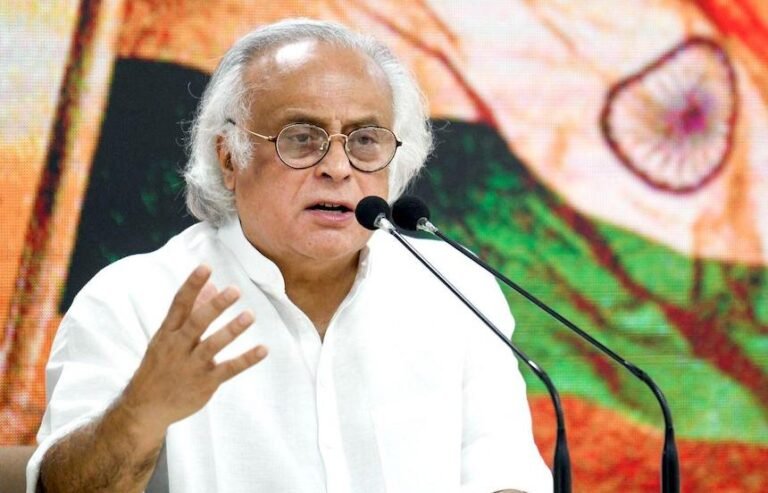
As people across the country exchanged Eid Mubarak greetings, senior Congress leader Jairam Ramesh brought attention to India’s long-standing defence collaboration with Russia, highlighting the BrahMos missile system as a symbol of continuity in national security policy. BrahMos: A Symbol of Indo-Russian CollaborationThe BrahMos missile, named after the Brahmaputra and Moskva rivers, stands as a testament to India-Russia defence cooperation. Jairam Ramesh noted that the missile programme is often in the spotlight and serves as a strong example of policy continuity that transcends political regimes.Genesis of the ProgrammeIndia’s journey toward missile self-reliance began with the Integrated Guided Missile Development Programme launched in 1983. By the mid-1990s, then-Defence Research and Development Organisation (DRDO) chief Dr. APJ Abdul Kalam and Dr. A. Sivathanu Pillai envisioned a collaborative effort with Russia to develop supersonic cruise missiles.Key Milestones and Political LeadershipAn inter-governmental agreement on BrahMos was signed on February 12, 1998, when I.K. Gujral served as Prime Minister. The first contract followed on July 9, 1999, under Prime Minister Atal Bihari Vajpayee. The maiden successful test of the missile was conducted on June 12, 2001. In a major diplomatic gesture, Russian President Vladimir Putin inaugurated the BrahMos headquarters in New Delhi on December 4, 2004.Progress Under UPA GovernmentsThe missile was inducted into the Indian Navy in 2005 and the Indian Army in 2007. The air-launched version debuted in 2012, during the tenure of Prime Minister Dr. Manmohan Singh. His government also played a pivotal role in further institutionalising the programme by establishing the BrahMos Integration Complex in Hyderabad and BrahMos Aerospace in Thiruvananthapuram. Dr. Singh’s leadership was also instrumental in finalising the Indo-US nuclear deal in 2005, which laid the groundwork for India’s entry into the Missile Technology Control Regime (MTCR) in 2016.
BJP Betrays Delhi with Power Cuts and Costlier Electricity: Kuldeep Kumar
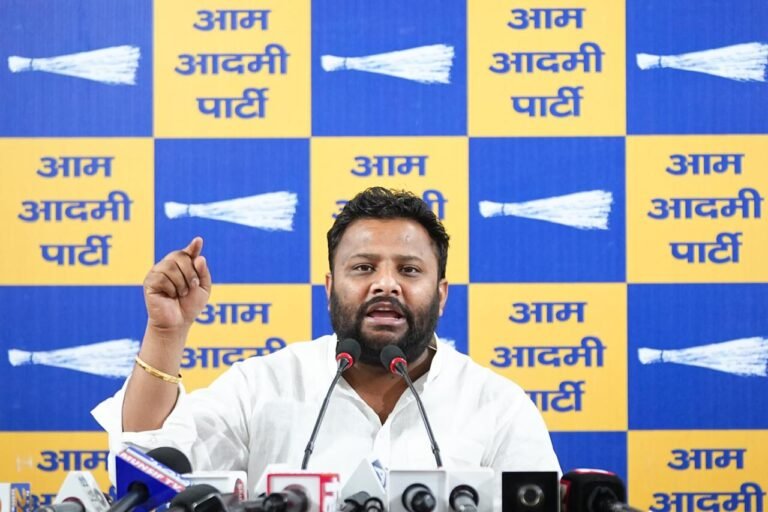
In a scathing attack on the BJP-led government, Aam Aadmi Party (AAP) senior leader and MLA Kuldeep Kumar on Monday accused the ruling party of betraying the people of Delhi by first imposing widespread power outages and now moving to increase electricity tariffs by 7%. Kejriwal Govt Ensured 24×7 Power, BJP Failing to Delivering on PromisesSpeaking at a press conference at the AAP headquarters, Kuldeep Kumar reminded Delhiites of the contrast in governance. “For 10 years, the Arvind Kejriwal government gave Delhi uninterrupted electricity supply, 200 units absolutely free, and 200–400 units at subsidised rates. This made Delhi the city with the cheapest electricity in the country,” he stated. In contrast, he said, the BJP—despite its campaign promises of 300 free units—has failed to deliver even basic electricity services. “Now Delhi is facing daily power cuts of 6–7 hours in peak summer, forcing citizens to reinstall inverters they had removed under the AAP regime,” he added. Power Hike to Benefit Private Firms, Burden CitizensKuldeep Kumar warned that the proposed 7% tariff hike in May and June would hit household budgets hard. “Instead of fulfilling its promise of free electricity, the BJP is now enabling private companies to earn profits by hiking rates and burdening the common man,” he said. He called the move a continuation of the BJP’s trend of aiding private interests at the public’s cost. “Be it fee hikes in private schools or electricity charges, BJP’s governance is proving to be anti-people and pro-corporate,” he alleged.AAP Vows Protest, Demands Immediate RollbackCalling the move unjust and insensitive, Kuldeep Kumar demanded an immediate reversal of the tariff hike and urged the BJP to honor its electoral promise of 300 units of free electricity. “If the BJP goes ahead with this anti-people decision, AAP will resist it on every platform. Delhi cannot be made to suffer for BJP’s failure to govern responsibly,” he said.
Ceasefire Between India and Pakistan, but Diplomatic Battle Continues
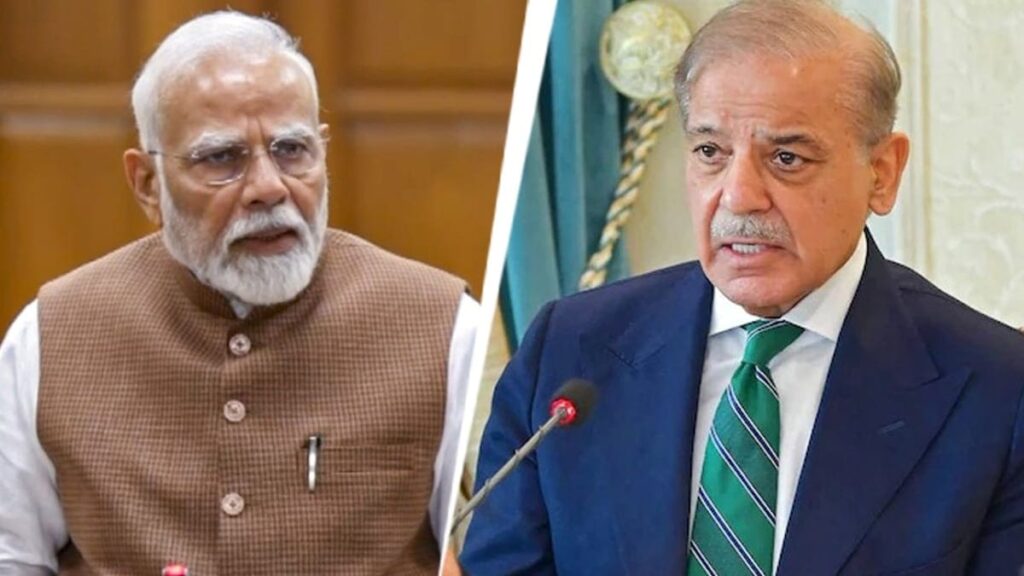
Despite the ceasefire between India and Pakistan along the border, the diplomatic conflict between the two nations remains ongoing. U.S. President Donald Trump welcomed the ceasefire agreement between the two countries and also offered mediation on the “thousands of years old” Kashmir issue. While Pakistan’s Prime Minister Shehbaz Sharif welcomed this offer, India rejected any third-party mediation. India Rejects Third-Party Mediation on KashmirAccording to sources from the Ministry of External Affairs, India has made it clear that its stance on the Kashmir issue is unambiguous, and it does not accept the interference of any third party. India emphasized that if Pakistan is willing to hand over terrorists, the door for dialogue is open. However, India made it clear that only the issue of Pakistan-occupied Kashmir (PoK) could be discussed. There is no room for discussions on other matters, and India does not want any external mediation. Trump’s Mediation Offer on KashmirEarlier, U.S. President Trump expressed his eagerness to work with both India and Pakistan to find a solution to the Kashmir dispute, describing it as a “thousands of years old issue.” His comments came a day after he claimed that the U.S. had brokered a ceasefire agreement between India and Pakistan. Pakistan Welcomes Trump’s OfferIn response to Trump’s offer, the Pakistani government issued a statement saying, “We appreciate President Trump’s willingness to support efforts for the resolution of the Jammu and Kashmir dispute, as it is a long-standing issue with deep implications for peace and security in South Asia and beyond.” Islamabad further emphasized that any just and lasting resolution to the Jammu and Kashmir issue should be in accordance with the United Nations Security Council resolutions and should ensure the protection of the fundamental rights of the Kashmiri people. In his first reaction after the agreement to reduce tensions between India and Pakistan, Prime Minister Shehbaz Sharif stated that he believes that the broader issues between the two countries, including Kashmir, water distribution, and other contentious matters, should also be addressed. India’s Firm Stance on KashmirIndia has consistently rejected any form of mediation on the Kashmir issue, asserting that it is a bilateral matter between India and Pakistan. However, India has now taken a firmer stance, stating that the Kashmir issue is no longer up for negotiation. The focus will now be on Pakistan-occupied Kashmir (PoK), and any talks can only proceed if Pakistan agrees to hand over terrorists or address the issue of PoK.
Aam Aadmi Party Attacks Central Government, Ceasefire Declaration by Trump an Attack on India’s Sovereignty: Sanjay Singh
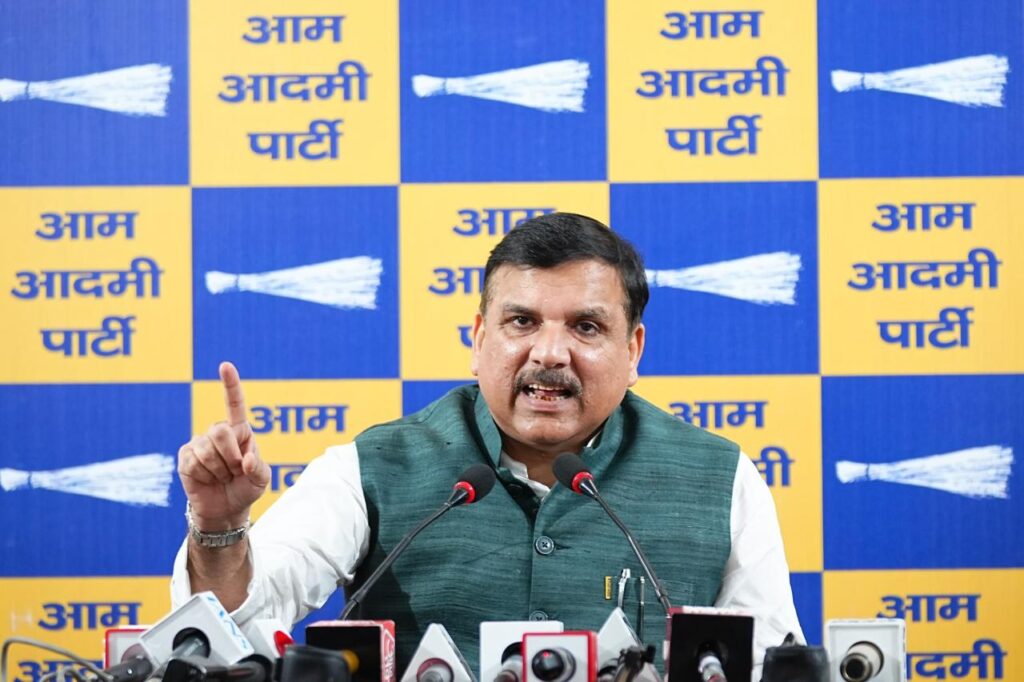
New Delhi: Aam Aadmi Party (AAP) has raised serious questions regarding the ceasefire declaration between India and Pakistan made by U.S. President Donald Trump. Senior leader and Rajya Sabha MP Sanjay Singh, in a press conference held on Sunday, termed this declaration as a direct assault on India’s sovereignty. He emphasized that while the Indian Army was destroying terrorist bases in Pakistan, the announcement of a ceasefire by the U.S. was unjustifiable. A Missed Opportunity Due to Ceasefire Declaration: Sanjay SinghSanjay Singh highlighted that the Indian Army had a rare opportunity to take decisive action on Pakistan-occupied Kashmir (POK) and potentially separate Balochistan from Pakistan. However, he claimed this historic opportunity was lost when Prime Minister Narendra Modi accepted U.S. mediation. “Third-Party Mediation Against India’s Policy”Sanjay Singh pointed out that for the last 70 years, India has never accepted third-party mediation in matters related to Pakistan. He argued that India’s sovereignty and decision-making autonomy should not be compromised, and the country is fully capable of taking its own decisions. Pahalgam Attack: When Will Action Be Taken Against Those Who Destroyed Our Sisters’ Vermillion?Sanjay Singh referred to the recent terrorist attack in Pahalgam, where 25 Indians and one Nepali citizen were brutally killed. He questioned why no action had been taken against the terrorists who carried out the attack and desecrated the vermillion of innocent women. He demanded an answer from the Prime Minister on the progress of the investigation and the steps being taken to hold the terrorists accountable. Saluting Indian Army’s Bravery, but Questions RemainSanjay Singh praised the bravery of the Indian Army, which destroyed nine terrorist bases in Pakistan and killed over 100 terrorists. He mentioned that the operation “Sindoor” had a clear objective of destroying 21 terrorist bases. However, the ceasefire halted the mission prematurely, leaving unresolved questions about the fate of the terrorists who targeted innocent civilians.Why Did India Succumb to U.S. Pressure?AAP leaders raised concerns over the Indian government’s acceptance of the U.S.-declared ceasefire without clarity. Sanjay Singh pointed out that the terms of the ceasefire were not made clear to the Indian public, asking if this was an infringement on India’s sovereignty and self-respect. “Will India Now Follow America’s Orders?”Sanjay Singh took issue with President Trump’s comments calling Pakistan a “great country.” He questioned if Prime Minister Modi also considered Pakistan, a nation that shelters terrorists, as “great.” He further questioned if India would now establish trade relations with Pakistan, a country that had failed to honor even a temporary ceasefire. AAP Demands Special Session of Parliament for ClarityConcluding the press conference, Sanjay Singh called for a special session of Parliament to be convened where the Prime Minister should explain the reasons behind agreeing to the ceasefire and provide transparency about the terms. He also urged the Prime Minister to address the public’s concerns about the national security situation.
Dr. Ragini Nayak Addresses Media on National Security, Operation Sindoor, and Congress’ Stand on Unity
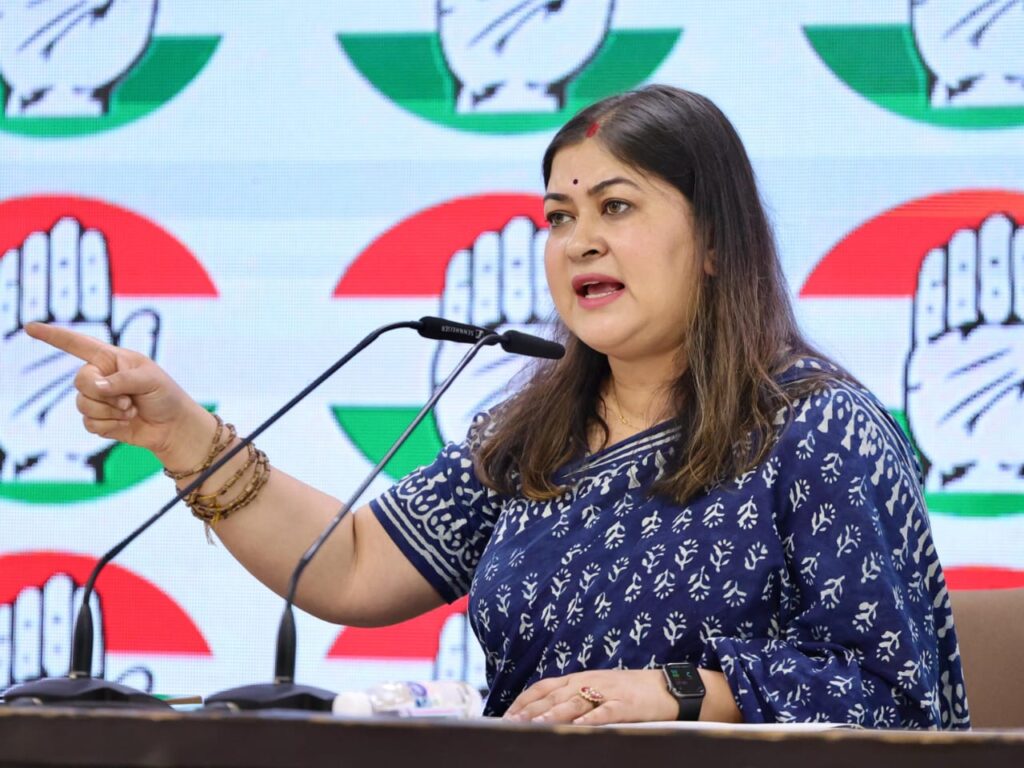
Dr. Ragini Nayak Basoya, spokesperson of the All India Congress Committee (AICC), held a press conference at the AICC Headquarters on 24 Akbar Road, addressing crucial issues concerning national security, the recent terror attack in Pahalgam, and the Congress party’s stance. Saluting the Armed ForcesDr. Nayak began her address by paying tribute to the Indian Armed Forces, emphasizing their unmatched valor, dedication, and sacrifice. Referring to the recent Operation Sindoor, she stated it was a proud moment for the country, demonstrating India’s military resolve in the face of terrorism. “Our army is establishing new benchmarks of bravery every day. We sleep peacefully because they are standing guard,” she noted. Operation Sindoor: A Fitting Response to TerrorismReferring to the Pahalgam terror attack, Dr. Nayak condemned the brutal targeting of innocent tourists by Pakistani-backed terrorists. She lauded the Indian military’s decisive counterattack through Operation Sindoor, which struck multiple terrorist bases in Pakistan-occupied Kashmir (PoK), including locations sheltering F-16 jets and air defense systems. She particularly praised women officers, Colonel Sofia Qureshi and Wing Commander Vyomika Singh, whose leadership in Operation Sindoor sent a strong message of national pride and gender empowerment. Dr. Nayak emphasized that this operation symbolizes India’s collective resistance against religious extremism. Unity in Diversity: The Need for Jai Hind YatraHighlighting the Congress party’s resolve to maintain national unity above politics, Dr. Nayak announced the launch of the “Jai Hind Yatra” from all Congress headquarters across India. This initiative, she said, is aimed at demonstrating India’s communal harmony and sending a unified message against terrorism. She asserted, “When Pahalgam was attacked, they asked for religion before shooting
Instagram Post Supporting Pakistan Sparks Tension in Sambhal; Youth Detained

Support for Pakistan Triggers Outrage in BahjoiAmid ongoing tensions between India and Pakistan, a controversial social media post has stirred unrest in Bahjoi, a town in Uttar Pradesh’s Sambhal district. A local youth allegedly showed support for Pakistan on Instagram, sparking anger and protests from the community. Controversial Post Shared on InstagramThe post, reportedly made from an account named ‘Mohammad Riaz’, stated, “No matter what happens, we will always support Pakistan” and featured a sticker of the Pakistani flag. The message quickly went viral, prompting sharp backlash from local residents, particularly from Hindu groups, who condemned the act as anti-national and submitted a complaint to the Bahjoi police station. Tensions Escalate in the LocalityAccording to reports, when a few local youths confronted the accused and requested him to delete the post, he allegedly refused and responded aggressively, using abusive language and issuing threats. This escalated tensions in the area, prompting concerns about communal harmony. Swift Police Action TakenThe police, led by Station House Officer Harish Kumar, swiftly intervened and detained the youth from his residence. His mobile phone and Instagram account have been seized for investigation. Legal Proceedings UnderwaySHO Harish Kumar confirmed that the youth is being interrogated, and legal action is being taken under charges of promoting enmity on social media, inciting nationalist sentiments, and disturbing public peace. Authorities are also probing whether the act was premeditated or influenced by any external organization or group.
Maharashtra CM Devendra Fadnavis: State on High Alert Amid India-Pakistan Tensions
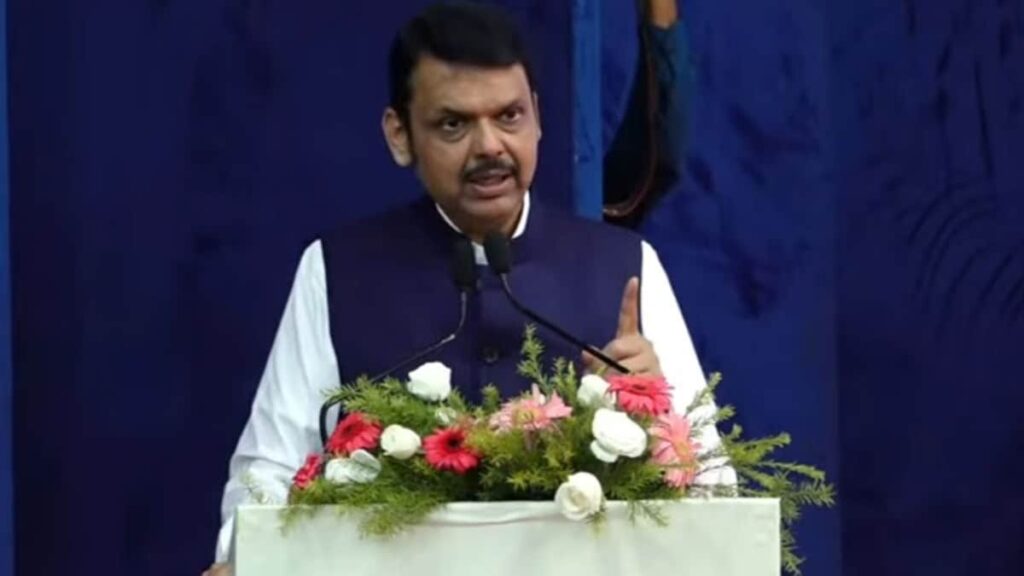
In light of escalating tensions between India and Pakistan, Maharashtra Chief Minister Devendra Fadnavis has confirmed that the state police, Coast Guard, and Navy have been placed on high alert. Speaking to the media on Friday, he emphasized that all Standard Operating Procedures (SOPs) are being strictly followed to ensure internal security.Review Meeting to Assess Internal SecurityAddressing concerns about the safety of the state’s coastline, the CM announced a high-level review meeting to be held later in the day to assess internal security measures. This comes just a day after India successfully thwarted Pakistan’s attempted attacks on Indian military bases.Proactive Measures in PlaceFadnavis added, “Police, Navy, and Coast Guard are fully alert. Regular drills are being conducted, and necessary steps are being taken as per protocol to maintain security. We are on full alert mode.” India Responds to Pahalgam Terror AttackThe Indian Armed Forces launched ‘Operation Sindoor’ early Wednesday morning in retaliation to a terror attack in Pahalgam that claimed 26 lives. The operation targeted terror bases in Pakistan-occupied Kashmir (PoK) and inside Pakistan. Pakistan’s Failed RetaliationIn response, Pakistan attempted to target 15 Indian cities, which was effectively countered by Indian security forces. India’s defense systems successfully neutralized threats and destroyed Pakistan’s air defense infrastructure in Lahore. Continued VigilanceLate Thursday night, Indian forces intercepted and neutralized further Pakistani attempts to target military bases in Jammu, Pathankot, Udhampur, and other strategic locations with drones and missiles.
