
Vijay Srivastava
New Delhi | May 12, 2026
Talking About the “Common People,” but Journalists Left Struggling at Arvind Kejriwal’s Press Conference
The media is often called the fourth pillar of democracy. Journalists work day and night to deliver leaders’ messages to the public, question governments, and hold those in power accountable. However, when the same journalists face mismanagement, discomfort, and disrespect at political events, serious questions arise not only about the arrangements but also about the mindset behind them. A similar situation was witnessed at a recent press conference held by Arvind Kejriwal in Delhi, sparking fresh debate over the claims of representing the common people.
Luxury on the Stage, Discomfort for Journalists
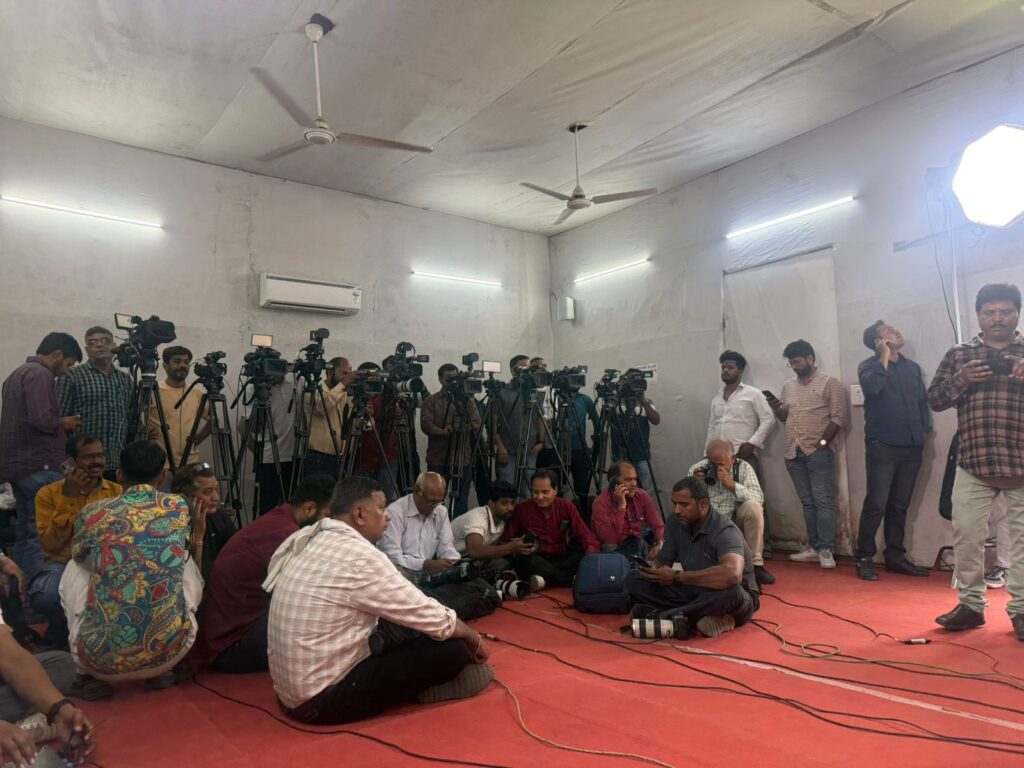
The stage at the press conference appeared fully organized. Comfortable seating, security arrangements, and special arrangements were clearly available for political leaders. However, the most concerning aspect was the lack of proper seating arrangements for journalists covering the event. Many reporters were forced to stand for hours, while several others had no option but to sit on the floor. Managing cameras, mobile phones, tripods, and other equipment in a crowded environment became extremely difficult. Several journalists described the situation as not only inconvenient but also disrespectful. The question being raised is simple: if journalists are responsible for conveying the voices of political leaders and parties to the public every day, should basic seating arrangements for them not be considered essential?
People-Focused Politics or Mere Sloganeering?
Arvind Kejriwal and the Aam Aadmi Party have long presented themselves as symbols of simplicity and people-focused politics. However, the visuals from this press conference have raised several concerns. Many people believe that if large political events can be organized with elaborate arrangements, then providing basic facilities for the media should not be difficult. A press conference is not merely a platform for speeches; it also reflects the organizational culture and mindset of a political party. The sight of journalists sitting on the floor during the event sparked criticism and debate across social media platforms.
Severe Heat and Lack of Basic Refreshments
Amid Delhi’s intense heat and humidity, journalists continued covering the event for hours. However, proper refreshments and drinking water arrangements also appeared inadequate. Many media personnel reportedly had to arrange water and food for themselves outside the venue. Camera operators and reporters continued working in extremely uncomfortable conditions amid the intense heat. This has further raised questions about whether political parties invite the media only for coverage and publicity, or whether they genuinely care about journalists’ working conditions.
Female Journalists Also Faced Difficulties
Women journalists present at the venue also struggled because of overcrowding and poor management. Constant pushing, limited space, and an unorganized atmosphere made reporting extremely challenging. At a time when political leaders frequently speak about women’s safety and dignity, many expected that female journalists would at least receive a properly managed and secure working space. However, the situation on the ground appeared very different.
Independent and Digital Journalists Were the Most Affected
In today’s digital era, independent reporters, YouTubers, and digital journalists play an increasingly important role in delivering political news to the public. Yet, at events like this press conference, they often face the greatest difficulties. Large media organizations somehow manage to secure space near the front, while smaller journalists are left standing behind crowds or sitting on the floor while trying to report. Several journalists expressed disappointment, stating that smaller digital platforms are often not taken seriously during such political events.
“We Are Forced to Sit on the Floor at Every Kejriwal Press Conference”
Some journalists attending the event openly expressed their frustration. According to them, such situations are not new. One digital reporter said This happens almost every time. Big news channels somehow get space in front, but smaller and digital journalists are forced to sit on the floor while covering the event. It feels as though our work is not considered important. Others alleged that the arrangements at these press conferences often appear designed to prioritize only selected groups, while the rest struggle in overcrowded conditions.
A Sense of Political Superiority?
The politics associated with Arvind Kejriwal has always revolved around the image of the “common man.” However, the visuals from the press conference raised an uncomfortable question: has political leadership begun to see itself as superior to ordinary journalists? When leaders sit comfortably on a decorated stage while journalists are forced to sit on the floor below, the image reflects not just poor management but also a deeper issue of attitude and perception. In a democracy, the relationship between political leaders and the media should be based on equality and mutual respect — not hierarchy.
Respect for the Media Cannot Exist Only in Speeches
Political parties often speak about press freedom and the importance of democracy. However, genuine respect is reflected through actions and arrangements, not speeches alone. A journalist is not merely a person standing with a camera. Journalists serve as a bridge between the public and those in power. They raise important questions, present public concerns, and ensure accountability. If journalists are repeatedly forced to face discomfort and disrespect during political events, it does not present a healthy image of democracy.
“Sheeshmahal” Versus Journalists Sitting on the Floor
The term “Sheeshmahal” has remained a major topic in Delhi politics for quite some time. Opposition parties have repeatedly accused Arvind Kejriwal of promoting a luxurious style of politics. Against this backdrop, the contrast at the press conference became even more striking: leaders seated comfortably on stage while journalists sat on the floor without chairs. Many social media users criticized the arrangements, arguing that any party claiming to represent the common people should first ensure dignity and respect for the journalists who carry their message to the public.
This Was Not Just a Press Conference — It Was a Test of Respect for the Media
This press conference became more than just a political event; it turned into a test of how the media is treated. Basic facilities such as chairs, refreshments, crowd management, and a respectful working environment are not unreasonable demands. They are standard responsibilities at any public event. If democracy is to remain strong, journalists must not be treated merely as instruments of publicity, but as an essential pillar of the democratic system itself.
When Will the Situation Change?
Political press conferences take place almost every day in Delhi. Every political party invites the media, delivers statements, and seeks public attention. Yet one question still remains unanswered: Will the basic concerns of journalists ever become a priority? This press conference has once again forced people to think about whether political parties that speak about democracy truly understand the importance of respecting the fourth pillar of democracy. Because journalists do not simply report the news — they play a crucial role in keeping democracy alive.
